

Calibration & Application of an NaI (Tl) Detector for Environmental Radiation Measurement
KJ Lawrence
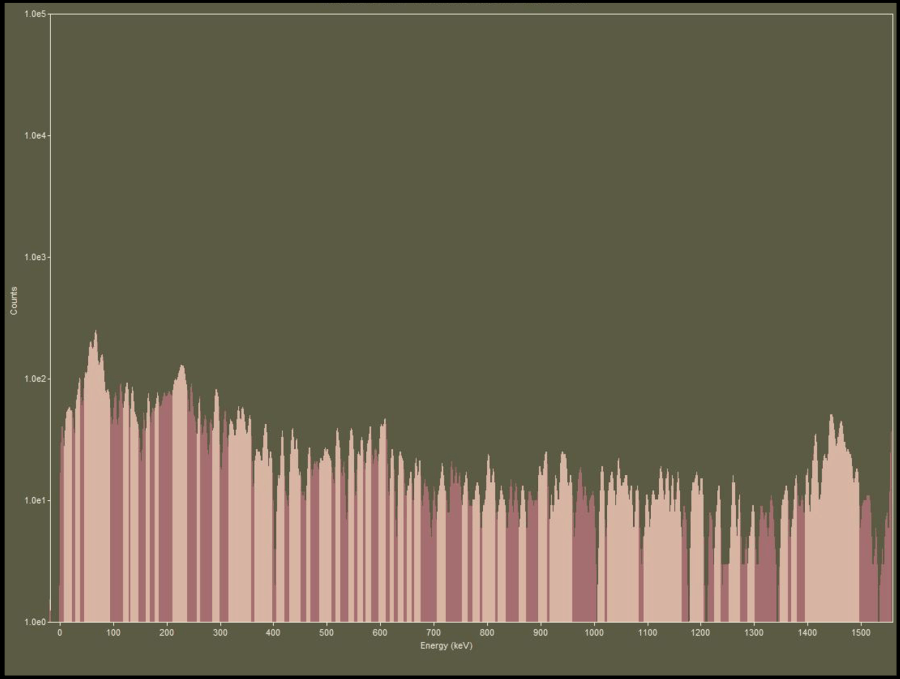
Environmental gamma radiation originates from naturally occurring and anthropogenic radionuclides. These radioactive substances are hidden within the soil which surrounds us everyday, contributing to long-term radiation exposure. Gamma-ray spectroscopy has been widely used to monitor environmental radioactivity in many regions across the globe. However, there is limited data for soils in the Antigonish region, making it difficult to establish baseline radiation levels or to assess potential contamination in this developing town. Many studies focus primarily on regions with industrial or nuclear activity, leaving gaps in the understanding of radiation levels in rural areas and farmlands. This research aims to address this lack of regional data by measuring gamma emitting radionuclides in soil samples using a sodium iodide (NaI (Tl)) scintillation detector. Soil samples were collected, prepared, and analyzed using gamma-ray spectroscopy using characteristic energy peaks to identify isotopes and measure their activity. Overall, the goal of this research is to aid in creating a regional radiation level database and to evaluate the effectiveness of NaI (Tl) detectors for environmental monitoring.
